INVESTMENT READINESS ASSESSMENT

Investment Readiness Assessment
for mining and critical minerals projects    

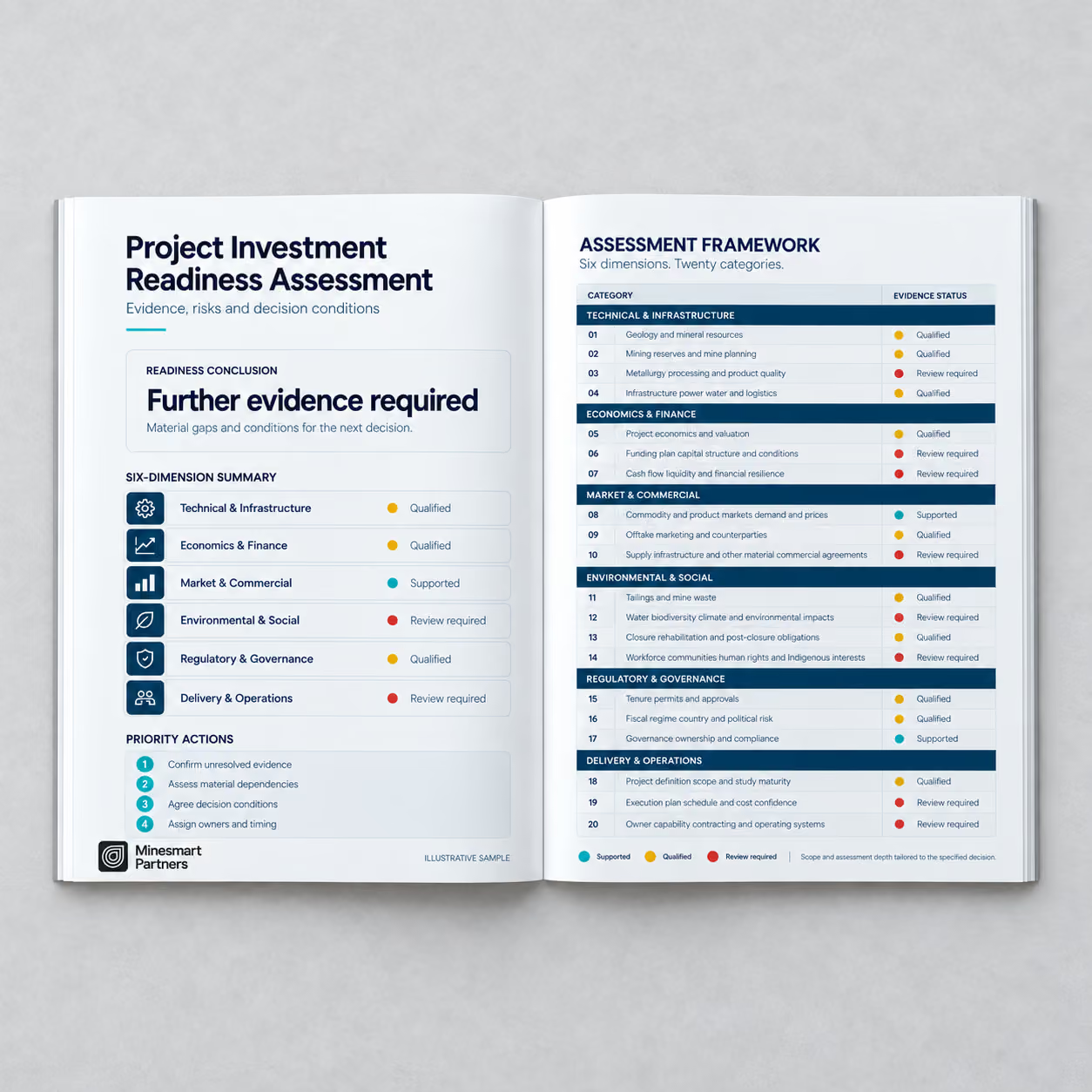
Our structured diagnostic shows developers, investors, lenders, and DFIs where a mining project stands, which gaps matter most, and what evidence is needed before capital or institutional support can move forward.
Most developers approach lenders and investors without knowing what decision makers will actually evaluate. Our Investment Readiness Assessment scores your project across five dimensions against lender, DFI, and best practice frameworks, identifies the gaps that matter most, and delivers a prioritised action plan to close them.     
Independent, not conflicted  
Benchmarked readiness view
Prioritised action plan
Project readiness assessment
01
An advisory-led assessment of your project documentation, evidence base, and investment case against a phase-specific readiness framework, producing a quantified scorecard and prioritised action plan to close the gaps that matter most.
Quantified readiness scorecard
Investment readiness gap identification
Prioritised action plan
Structured evidence library
Who it’s for
Mining and critical minerals developers from PEA through BFS stage preparing for institutional financing, DFI appraisal, regulatory approval, or investor engagement.
Outcome
A quantified readiness score, material gap register, structured evidence library, and prioritised action plan to close the gaps that matter most.
Download Sample Report
Independent project readiness assessment   
02
An independent assessment of a project's investment readiness, reviewing and validating the developer's documentation and evidence base against the standards, principles, guidelines, and best practice frameworks that lenders, investors, and DFIs apply when evaluating a project for financing or investment.
Five-dimension readiness assessment
Every input independently validated
Material gaps identified
Deeper due diligence recommendation
Who it’s for
Mining equity funds, royalty and streaming companies, and commercial banks and DFIs needing an independent view of a project's investment readiness before committing evaluation resources, mandate, or capital.
Outcome
An independent readiness assessment showing material strengths, critical gaps, a five-dimension readiness signal, and a clear recommendation on whether the project warrants deeper evaluation or mandate.
Download Sample Report
Pipeline readiness assessment
03
A comparative readiness assessment across a pipeline of mining and critical minerals projects, helping multilaterals and DFIs prioritise appraisal resources, technical assistance, and investment support.
Comparative readiness ranking
Fatal flaw screen
Pipeline gap analysis
Pipeline surveillance available
Who it’s for
Multilateral development banks, DFI programme officers, and government mining ministries managing critical minerals project pipelines and allocating appraisal and technical assistance resources.
Outcome
A comparative pipeline readiness matrix, fatal flaw identification, and individual project memos formatted for appraisal advancement, technical assistance allocation, and strategic prioritisation.
Discuss Your Portfolio
DELIVERABLES
See what your assessment delivers.
The Investment Readiness Assessment delivers a scored view of project readiness across the five dimensions that matter to capital providers, institutions, and decision makers. It shows where the project stands, which evidence is missing or incomplete, and which gaps need to be addressed before financing, appraisal, approval, or deeper due diligence can proceed.
Your readiness signal
A clear readiness tier showing whether the project is ready to advance, requires targeted remediation, or needs more fundamental work before decision makers engage.
Your deliverables
A readiness scorecard, material gap register, structured evidence library, and prioritised action plan to close the gaps that matter most.
Assessment scope
5 Dimensions
Technical. Financial. Environmental. Social. Governance.
Request your assessment
STANDARDS & BENCHMARKS

Benchmarked against the standards, principles, guidelines, and best practice frameworks capital providers apply.

The Investment Readiness Assessment benchmarks your project against the standards, principles, guidelines, and best practice frameworks that lenders, DFIs, regulators, and institutional investors apply in their own evaluation processes.
Capital providers evaluate projects against established standards, principles, guidelines, and best practice frameworks. These are the references your project will be measured against.
The references below highlight the primary standards, principles, guidelines, and best practice frameworks applied across each dimension. The full reference set is jurisdiction-specific and varies by project location, regulatory regime, and capital source.
Technical

Evaluates resource confidence, study reliability, execution credibility, and capital cost confidence: the technical foundation of lender and independent reviewer assessment.

NI 43-101. Canadian technical disclosure standard for mineral projects, referenced by TSX and TSXV issuers and investors assessing Canadian capital markets disclosure.
JORC Code 2012. Australasian reporting code for exploration results, mineral resources, and ore reserves, aligned with the CRIRSCO family of reporting standards.
SEC Regulation S-K Item 1300. US mineral disclosure framework for SEC registrants, used by NYSE and Nasdaq-listed mining companies reporting mineral resources and reserves.
CRIRSCO International Reporting Template. International reporting template underpinning CRIRSCO-style codes, supporting consistency in market-related mineral resource and reserve reporting across jurisdictions.
AACE 47R-11. Mining and mineral processing cost estimate classification recommended practice, used to assess estimate maturity, accuracy range, and contingency adequacy across study stages.
Financial

Assesses the quality, transparency, and bankability of the project economics, funding structure, cost basis, and financial model.

AACE 47R-11. Mining and mineral processing cost estimate classification recommended practice, used to assess whether capital and operating cost estimates are appropriate for the project’s study stage.
FAST Standard. Financial modelling standard promoting models that are flexible, appropriate, structured, and transparent for review by lenders, investors, and internal decision makers.
LMA Green Loan Principles. Market framework for green loans, relevant where the project seeks green, sustainability-linked, or transition-aligned financing.
LMA Sustainability-Linked Loan Principles. Market framework for sustainability-linked loans, relevant where financing terms are linked to sustainability performance targets.
Equator Principles EP4. Project finance risk management framework used by financial institutions to identify, assess, and manage environmental and social risks in projects.
Environmental

Assesses environmental baseline quality, permitting readiness, climate and nature-related risk, tailings governance, and closure planning.

IFC Performance Standards PS1, PS3 and PS6. Core environmental and social performance standards for risk management systems, resource efficiency, pollution prevention, biodiversity, and critical habitat.
Equator Principles EP4. Financial-sector framework used by project finance lenders to determine, assess, and manage environmental and social risk in projects.
World Bank Group EHS Guidelines for Mining. Sector-specific environmental, health, and safety reference used in DFI appraisal and independent environmental and social review.
TNFD Metals & Mining Guidance. Sector guidance for identifying, assessing, managing, and disclosing nature-related issues in metals and mining.
Global Industry Standard on Tailings Management. Global tailings standard focused on preventing catastrophic failure and improving tailings facility safety across the lifecycle.
ICMM Integrated Mine Closure Good Practice Guide, 3rd Edition. Current mine closure guidance promoting integrated closure planning, financial provisioning, and closure governance across the mine lifecycle.
Social

Evaluates stakeholder engagement, labour and working conditions, community health and safety, resettlement, Indigenous Peoples, and human rights readiness.

IFC Performance Standard 1. Establishes the environmental and social management system, stakeholder engagement, disclosure, and grievance mechanism requirements that support the wider E&S assessment.
IFC Performance Standard 2. Sets requirements for labour and working conditions, including worker rights, occupational health and safety, contractor management, and non-discrimination.
IFC Performance Standard 4. Addresses community health, safety, security risks, emergency preparedness, and project-related impacts on surrounding communities.
IFC Performance Standard 5. Sets requirements for land acquisition, involuntary resettlement, livelihood restoration, and compensation for project-affected people.
IFC Performance Standard 7. Establishes requirements for Indigenous Peoples, including Free, Prior and Informed Consent where applicable.
UN Guiding Principles on Business and Human Rights. Global framework for corporate human rights due diligence, used to assess how project-related human rights risks are identified, prevented, mitigated, and addressed.
Governance

Assesses ownership transparency, corporate governance, legal rights, permitting, anti-corruption controls, reporting quality, and organisational readiness.

G20/OECD Principles of Corporate Governance 2023. International benchmark for corporate governance frameworks, investor protection, disclosure, board responsibilities, and market confidence.
OECD Guidelines for Multinational Enterprises on Responsible Business Conduct. International responsible business conduct framework covering disclosure, human rights, labour, environment, anti-corruption, and governance.
ICMM Mining Principles. Responsible mining principles covering ethical business, decision making, human rights, risk management, health and safety, environmental performance, conservation, responsible production, social performance, and stakeholder engagement.
GRI 14: Mining Sector 2024. Mining sector sustainability reporting standard that identifies material sector impacts and supports consistent disclosure by mining organisations.
EITI Standard. Transparency standard for extractive sector revenues, contracts, licences, beneficial ownership, and government-company accountability.
FAQ

Questions we hear every time

Developers, investors, lenders, DFIs, governments, and OEMs ask different questions about the assessment. Here are the ones we hear most often.
What does the Investment Readiness Assessment actually evaluate?

The assessment evaluates a mining or critical minerals project across five dimensions: Technical, Financial, Environmental, Social, and Governance. It tests the project’s evidence base against the standards, expectations, and best practices used by lenders, investors, DFIs, regulators, and institutional decision makers. The output is a readiness scorecard, material gap register, structured evidence library, and prioritised action plan.

How does this differ from a technical report or due diligence review?

A technical report usually focuses on technical disclosure. A due diligence review is typically commissioned by a financier after a project enters a financing or investment process. The Investment Readiness Assessment is completed earlier. It looks across technical, financial, environmental, social, and governance readiness, helping identify what needs to be addressed before lender, investor, or DFI engagement.

Can the assessment be commissioned independently of the developer?

Yes. The Project Readiness Screen is designed for investors, lenders, royalty companies, and streaming firms that need an independent view of a project before deeper evaluation or due diligence. Developer assessments are advisory-led and use project documentation directly. Portfolio assessments can be commissioned by DFIs, governments, or OEMs across a wider project or supplier pipeline.

What does each type of client actually receive?

Developers receive a readiness assessment report, material gap register, structured evidence library, and prioritised action plan. Investors and lenders receive a concise project readiness screen showing strengths, material gaps, readiness signal, and a recommendation on whether to advance to deeper evaluation. DFIs, governments, and OEMs receive a portfolio readiness matrix, fatal flaw screen, and individual project memos to support appraisal, procurement, programme funding, or strategic prioritisation.

How does the assessment relate to the financing or appraisal process?

For developers, the assessment helps strengthen the project before formal lender, investor, or DFI engagement. For investors and lenders, it provides an independent early view before deeper due diligence resources are committed. For DFIs, governments, and OEMs, it helps prioritise which projects or suppliers are ready to advance and which require further support.

How does Minesmart maintain independence of assessment?

Independence is built into how we work. We do not execute project work, manage construction, or hold undisclosed interests in projects we assess. Where any commercial arrangement could affect perceived independence, it is disclosed from the outset. Third-party reliance on our reports is limited to named addressees, and use in securities filings requires our written consent.

Get Started

Get your project approved, financed, and delivered.

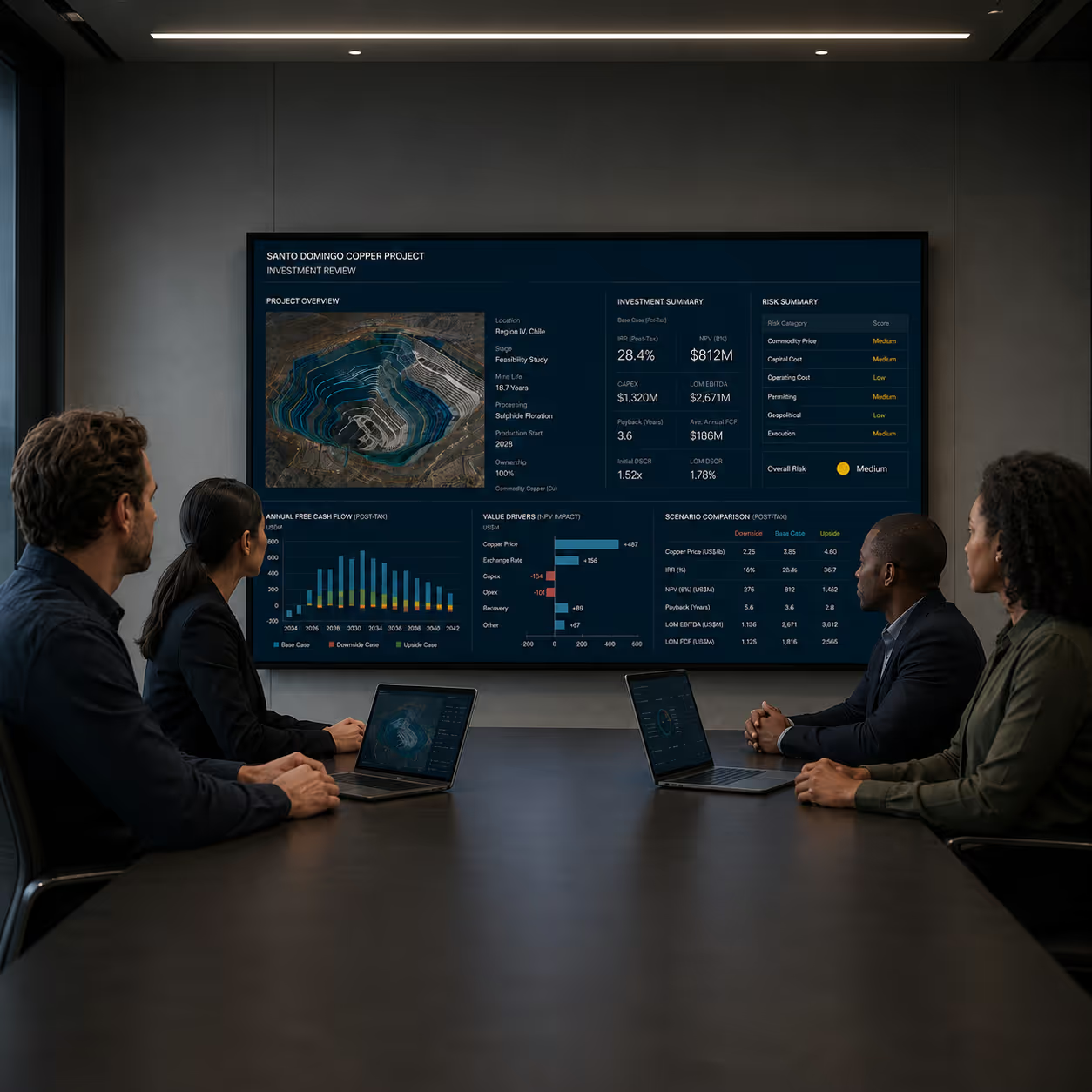
Tell us about your project. We will identify the gaps blocking approvals and financing, surface the value drivers that strengthen your investment case, and quantify the risks that could derail it, so you can move forward with confidence.
Schedule Your Strategy Call
Need help?