

Quantified risk assessment
for mining and critical minerals projects









Five dimensions.
One integrated risk view .
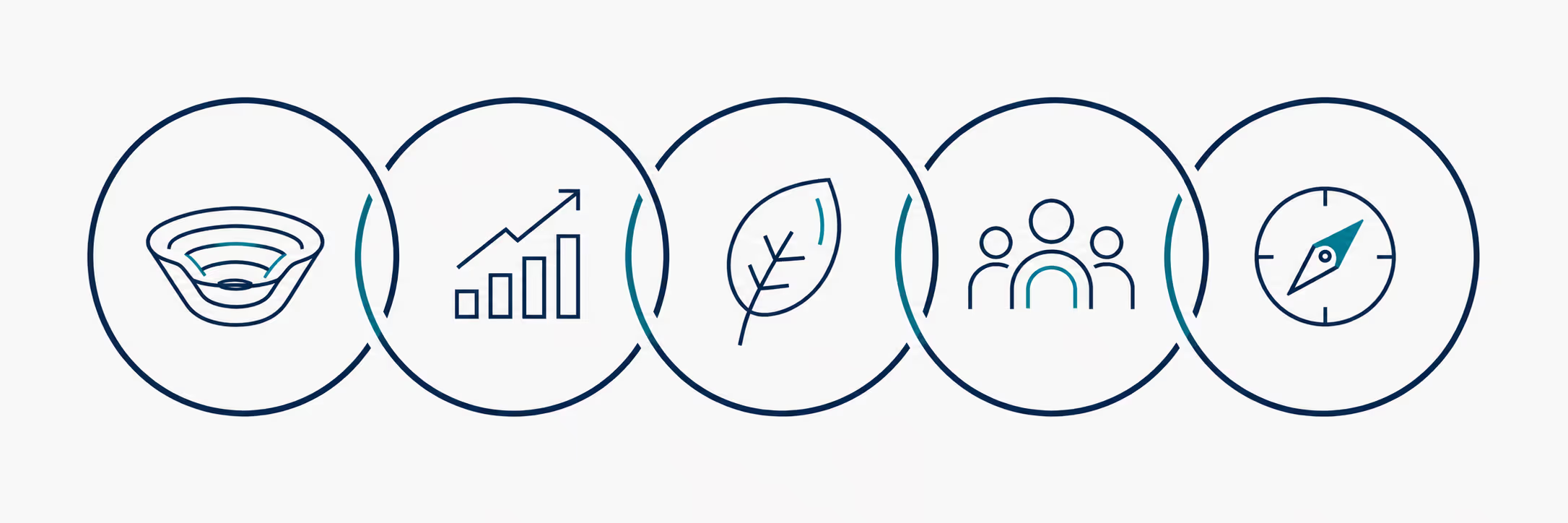

Assesses the technical foundations that determine resource confidence, development risk, capital reliability, and delivery credibility.
T.1 Geology & Mineral Resources
T.2 Mining, Mineral Reserves & Mine Planning
T.3 Metallurgy, Process & Product Quality
T.4 Infrastructure & Services
Tests whether the project economics, funding pathway, and financial model can withstand lender and investor scrutiny.
F.1 Market Viability & External Context
F.2 Project Economics, Funding & Financial Model
Evaluates tailings, environmental obligations, closure requirements, climate exposure, and residual risks that affect approvals and financing.
E.1 Tailings Facility Design, Operation & Monitoring
E.2 Environmental Impacts, Biodiversity & Climate
E.3 Mine Closure, Rehabilitation & Transition
Assesses social performance, stakeholder exposure, human rights, resettlement, and community-related risks that can shape project approval and capital confidence.
S.1 Social Performance & Human Rights
S.2 Resettlement, Livelihoods & Local Benefits
Reviews the governance, ownership, permitting, execution, and organisational foundations required to move from study to investment decision.
G.1 Project Strategy, Scope & Value Proposition
G.2 Governance, Ownership & Compliance
G.3 Legal Rights, Tenure & Permitting
G.4 Execution Readiness, Organisation & Systems
Questions we hear every time
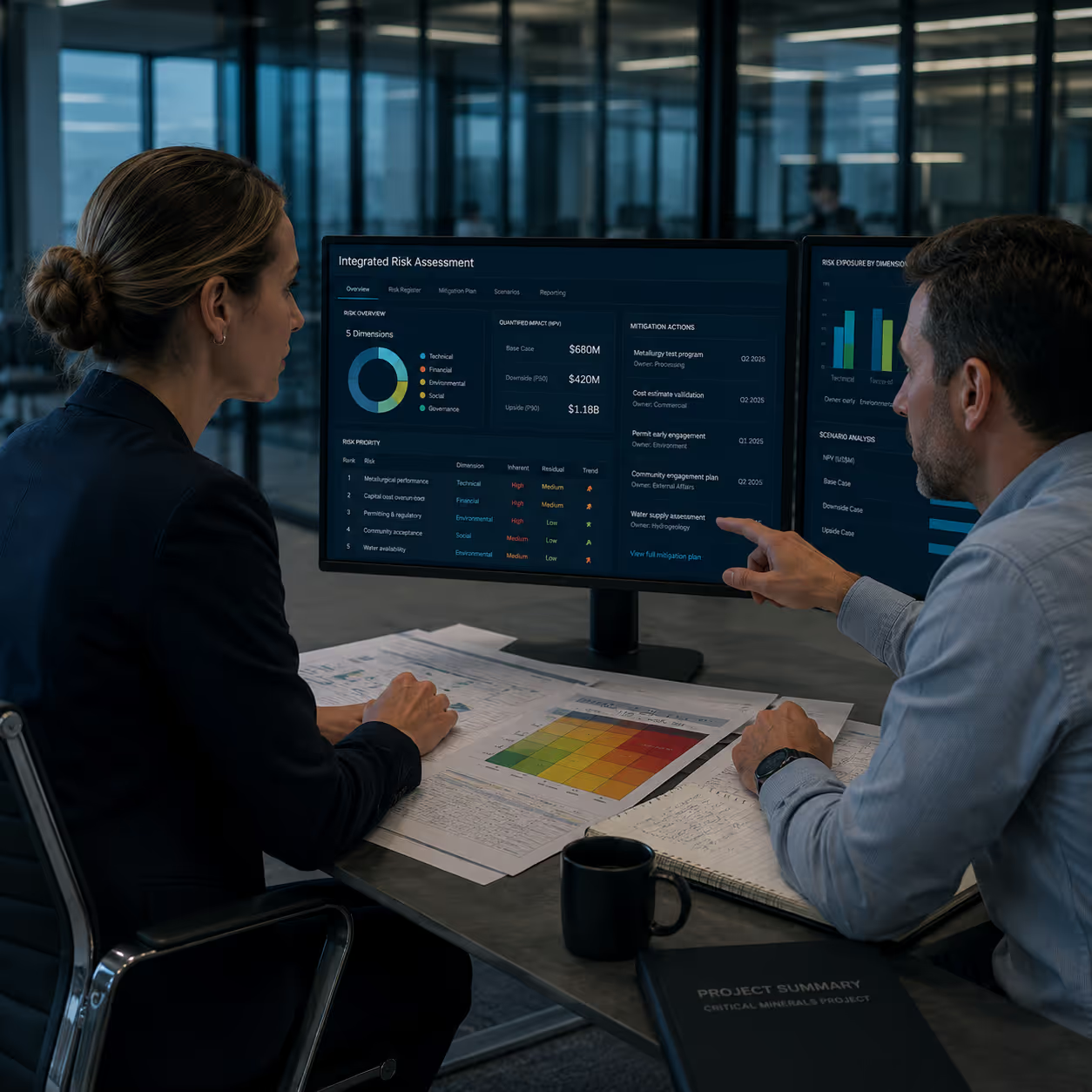
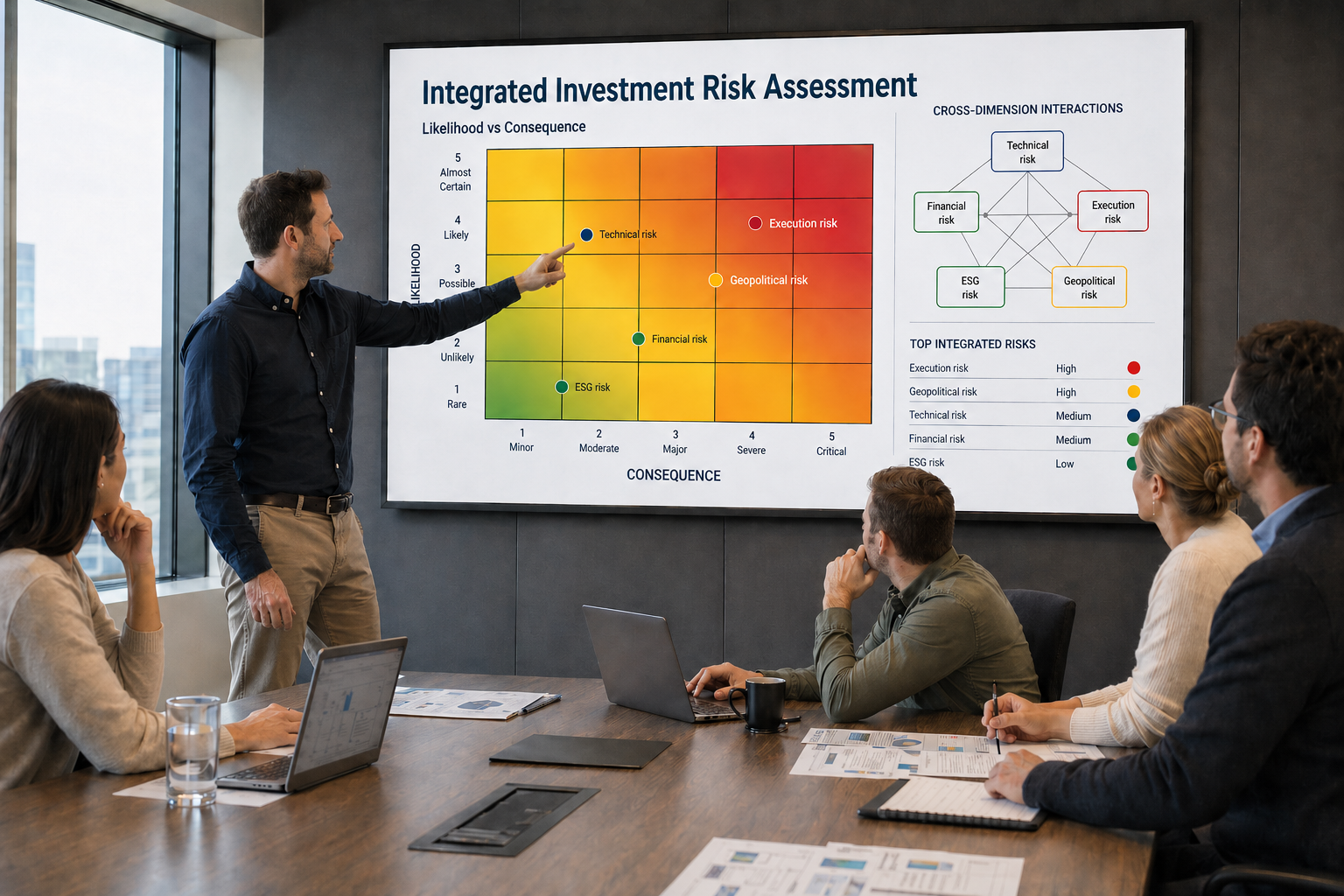
A normal risk register usually records what could go wrong and rates each risk by likelihood and severity. The Integrated Risk Assessment goes further. It maps material risks across technical, financial, environmental, social, and governance dimensions, identifies how those risks interact, and translates the most important ones into financial consequences.
The assessment produces a quantified risk register, financial consequence analysis, prioritised mitigation action plan, and decision-ready risk summary. Depending on the engagement, it may also include scenario stress testing, classified mitigation conditions, and project risk memos for lenders, investors, boards, or programme teams.
No. Minesmart does not replace the qualified specialists who produce technical reports, environmental and social studies, or financial models. We integrate their outputs, test the connections between them, identify material gaps, and translate the combined risk picture into language that investment decision makers can use.
Each material risk is linked to the part of the investment case it can affect, such as capital cost, operating cost, schedule, production, recovery, permitting, funding conditions, or debt service capacity. This shows which risks have the greatest potential impact on project value, financing terms, or approval readiness.
Yes. The independent risk assessment is designed for investors, lenders, royalty companies, and streaming firms that need a clear view before committing deeper evaluation resources, mandate time, or capital. It validates the developer’s risk profile, identifies material exposures, and provides a clear recommendation on whether the project should advance.
The pipeline risk assessment applies the same core methodology across multiple projects. It helps institutions compare risk exposure, identify fatal flaws, prioritise appraisal resources, allocate technical assistance, and decide which projects deserve further support on an evidence-based basis.
