
A Bankable Feasibility Study that cost USD 8 million and took three years to complete. A project that ticks every technical box. A developer who is confident, prepared, and ready to approach the bank. And then — nothing. The mandate does not come. The credit committee raises questions that were never anticipated. The process stalls for six months while the developer scrambles to produce documentation nobody told them they would need.
This is not an unusual story. It is the standard experience for a significant proportion of mining developers who reach the BFS stage.
McKinsey's most recent study of 80 global mining projects, published in 2024, found that cost and scheduling challenges affect 83 percent of major mining and metals projects. Megaprojects averaging more than USD 1 billion in capital expenditure suffered average cost overruns of 79 percent and schedule delays of 52 percent. The problems identified were almost universally visible before the financing process began. They were not identified because nobody was looking in the right places.
The root cause isa structural gap between what a Bankable Feasibility Study is designed to produce and what a lender's credit committee is actually trying to answer.
A BFS is designed to prove technical and economic viability. An investment committee is asking a different question entirely: what are the risks that could prevent this project from servicing its debt, and are they manageable?
These are not the same question. And the gap between them is where most financing processes stall.
What a BFS Actually Produces
A standard Bankable Feasibility Study, whether produced to NI 43-101, JORC, or SAMREC standards, is anchored in technical certainty. It certifies the reserve base. It validates the process design. It produces a capital cost estimate to AACE Class 3 accuracy. It demonstrates that the project is technically executable and economically viable under a base case set of assumptions.
It does this extremely well. A BFS produced by SRK, AMC, or Snowden Optiro to a major exchange standard is a rigorous, defensible technical document. The Qualified Person who signs it has staked their professional reputation on its accuracy.
But the BFS is a technical document. Its risk section is a five-by-five heat map listing thirty or more risks with equal weight. It does not rank those risks by financial impact. It does not translate a geotechnical risk into DSCR deterioration. It does not stress-test the financial model under combined adverse conditions. It does not assess whether the project's social license is secure or whether the permitting pathway is realistic.
None of this is a criticism of the BFS. It is doing exactly what it is designed to do. The problem is that developers treat the completion of the BFS as the signal that they are financing-ready. In most cases, they are not.
The Five Questions a Credit Committee Is Actually Asking
When a project finance credit committee reviews a mining project, they are working through a specific set of questions that the BFS rarely answers directly:
- What are the three to five risks most likely to cause this project to breach its debt service coverage covenant?
- Under a plausible downside scenario combining the two or three most material risks, does the project still service its debt?
- Is the DSCR floor of 1.20 to 1.30 times maintained under P90 conditions across all key technical and financial inputs simultaneously?
- What is the ESG risk profile in financial terms, not as a list of mitigation measures?
- Are there any fatal-flaw risks — governance, social, permitting, political — that make this project unbankable regardless of its technical quality?
None of these questions are answered by the NI 43-101, the ESIA, or the developer's financial model in isolation. The NI 43-101 lists risks with equal weight. The ESIA quantifies mitigation costs but does not translate them into cash flow impact. The financial model is built to the developer's own assumptions, which diverge from bank conventions in five standard ways that add six to twelve weeks to every credit review process.
The Five Standard Divergences That Cost Developers Time and Money
Every projectfinance bank applies a set of standard adjustments to a developer's financialmodel before running their own credit analysis. These adjustments are wellknown within banking circles and almost universally unknown to developers untilthe bank's credit committee raises them. Each one adds two to four weeks to thecredit review process. Combined, they represent six to twelve weeks of avoidable delay on every financing.
- Reserve restriction to Proved and Probable only. Inferred and Measured-and-Indicated resources that appear in the developer'sLOM plan are excluded from the bank's reserve base.
- Commodity price at 70 to 85 percent of long-run consensus. Developer price decks are typically more optimistic than the consensus view lenders apply.
- Operating cost with a five to ten percent bufferabove the BFS estimate. Banks apply a systematic contingency to operating costassumptions.
- Capital cost with 15 to 20 percent contingency.BFS-level capex estimates at AACE Class 3 accuracy carry an inherentuncertainty range that banks account for explicitly.
- Ramp-up extended by six to twelve months. Production ramp-up assumptions in developer models are almost universally optimistic relative to industry experience.
A developer who does not know these fiveadjustments before approaching a bank is walking into a credit committeecarrying a financial model that will be rebuilt before the first substantiveconversation begins.
The consequenceis not just delay. It is the signal it sends. A developer who arrives at a bankmandate meeting without understanding how their model diverges from bankconventions signals to the credit team that their preparation is incomplete.The first impression of the project's investment case is formed in thatmeeting, and it is very difficult to recover from.
The Three Dimensions Most BFS Reports Miss Entirely
The structuralgap between a BFS and a financing-ready investment case is most visible inthree dimensions that the BFS is not designed to address.
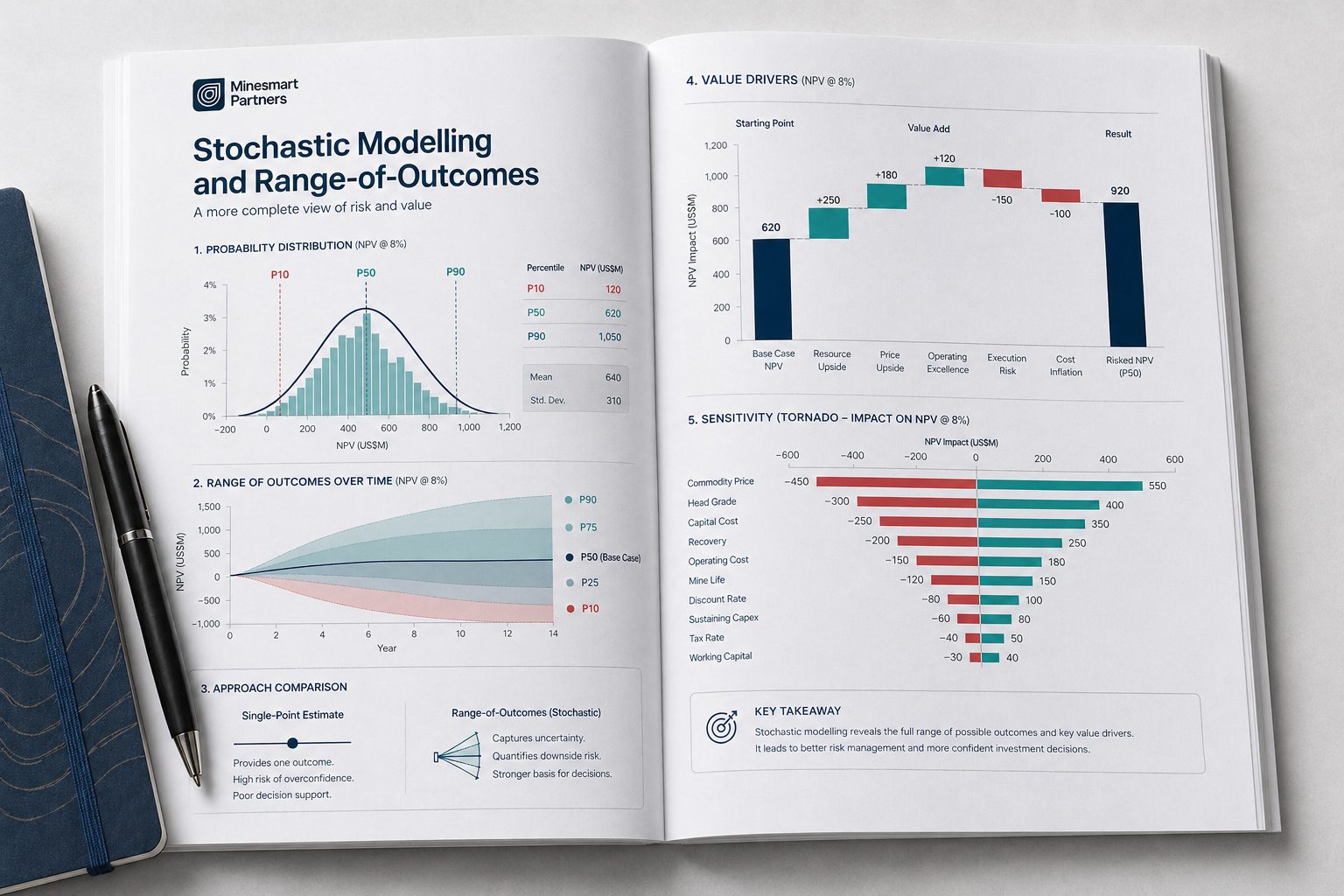
The first is thefinancial risk dimension. The BFS produces a base-case financial model. It doesnot produce a lender-equivalent model. It does not apply the five standard bankadjustments. It does not stress-test the DSCR under combined adverse conditions.It does not include a Monte Carlo analysis producing P10, P50, and P90financial outcomes. All of this work is done by the bank's independent engineerand the developer's financial advisor during the financing process, at thedeveloper's cost and on the bank's timeline.
The second is thesocial and community dimension. A BFS may reference an ESIA that is still inprogress, a community consultation process that is ongoing, or a social licenceassessment that has not been independently verified. From a technical perspective,this is entirely normal at BFS stage. From a lender's perspective, anunresolved social licence question is a potential deal-stopper regardless ofthe technical quality of the project. The Cobre Panama precedent has made everyEquator Principles lender acutely aware of what happens when social licenceassumptions prove optimistic.
The third is thegovernance and political risk dimension. Beneficial ownership transparency,anti-bribery compliance, jurisdiction risk, and resource nationalism exposureare assessed by lenders through their KYC and credit processes, not through theNI 43-101. A developer with opaque corporate structure, directors withunexplained background flags, or a project in a jurisdiction with recentresource nationalism precedent will face questions that no BFS can answer.
What Financing-Ready ActuallyMeans
Beingfinancing-ready is not the same as having a completed BFS. A financing-readyproject is one where the developer understands and can address every question acredit committee will ask before the financing process begins, not during it.
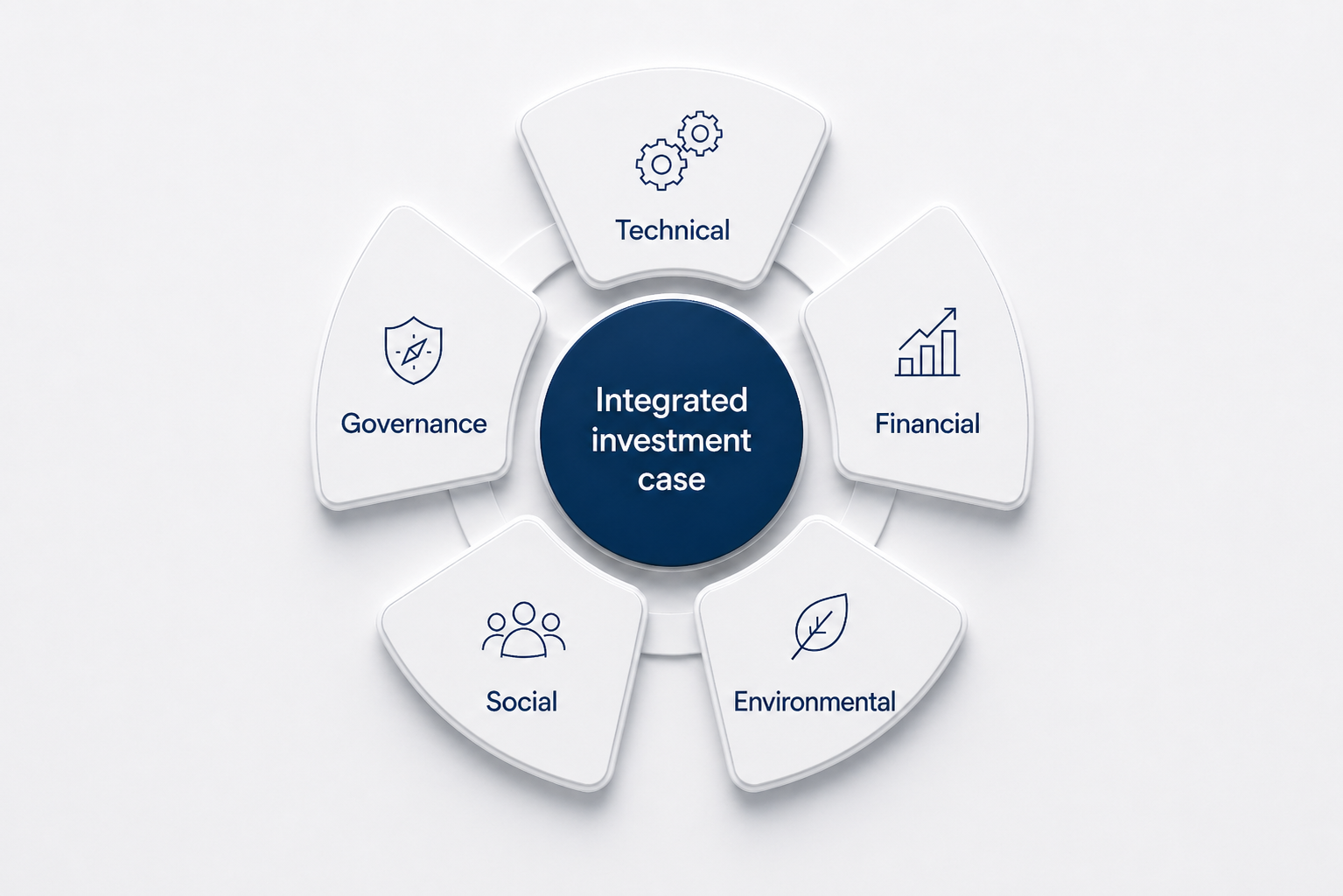
This requiresfour things that go beyond the BFS. First, a lender-equivalent financial modelthat applies bank conventions and demonstrates DSCR adequacy under stress.Second, an integrated risk assessment that maps material risks across all fivedimensions to specific financial consequences, ranks them by severity, andprovides a credible mitigation roadmap. Third, documented social licence andcommunity engagement that goes beyond the ESIA to demonstrate that the projecthas earned the right to operate in the eyes of affected communities. Fourth,governance and regulatory transparency that removes any ambiguity aboutownership structure, director background, and jurisdictional risk profile.
None of this isimpossible to produce. All of it is producible before the financing processbegins. The developers who arrive at a bank mandate meeting with thisdocumentation in hand do not experience six-month delays. They move frommandate to credit approval faster, with fewer conditions, and with a strongernegotiating position on debt terms.
The Cost of Waiting
The conventionalapproach is to let the bank's independent engineer and IESC identify the gapsduring the financing process. The developer receives a list of conditions andspends six to eighteen months addressing them while the bank's clock isrunning.
The alternativeis to identify and address those gaps before the financing process begins. Apre-financing integrated assessment that covers all five dimensions in alender-aligned format costs a fraction of the time and fee that an extendedcredit review process costs. It reduces the independent engineer's scope, whichreduces LIE fees. It gives the developer's financial advisor a risk register towork from, which improves the quality of the Information Memorandum. It signalsto the bank's credit team that the developer understands what they are asking.
Most importantly,it converts the financing process from a discovery exercise into a verificationexercise. The bank is confirming what the developer already knows, rather thandiscovering what the developer does not.
The lender will commission this work regardless. The question is whether it is done before the financing process starts, to the developer's advantage, or during it, to the lender's.
The financing gapin mining is not a capital supply problem. There is no shortage ofinstitutional capital seeking exposure to quality critical minerals projects.It is a project preparation problem. The projects that attract mandates quicklyare the ones that make it easy for capital providers to say yes. They do notleave a credit committee hunting for answers across six documents in threevocabularies produced by firms who have never spoken to each other.
A BFS is the beginning of the financing conversation, not the end of the preparation for it.
About Minesmart Partners
Minesmart Partners is a specialist mining and criticalminerals advisory firm providing Investment Readiness Assessments,Techno-Economic Modelling, and Integrated Risk Assessments for mining projectsat every stage of development. We occupy the integration layer betweentechnical consultants, ESG specialists, and financial advisors — producing thesingle decision-ready investment case that credit committees, DFI investmentofficers, and equity fund ICs actually need.